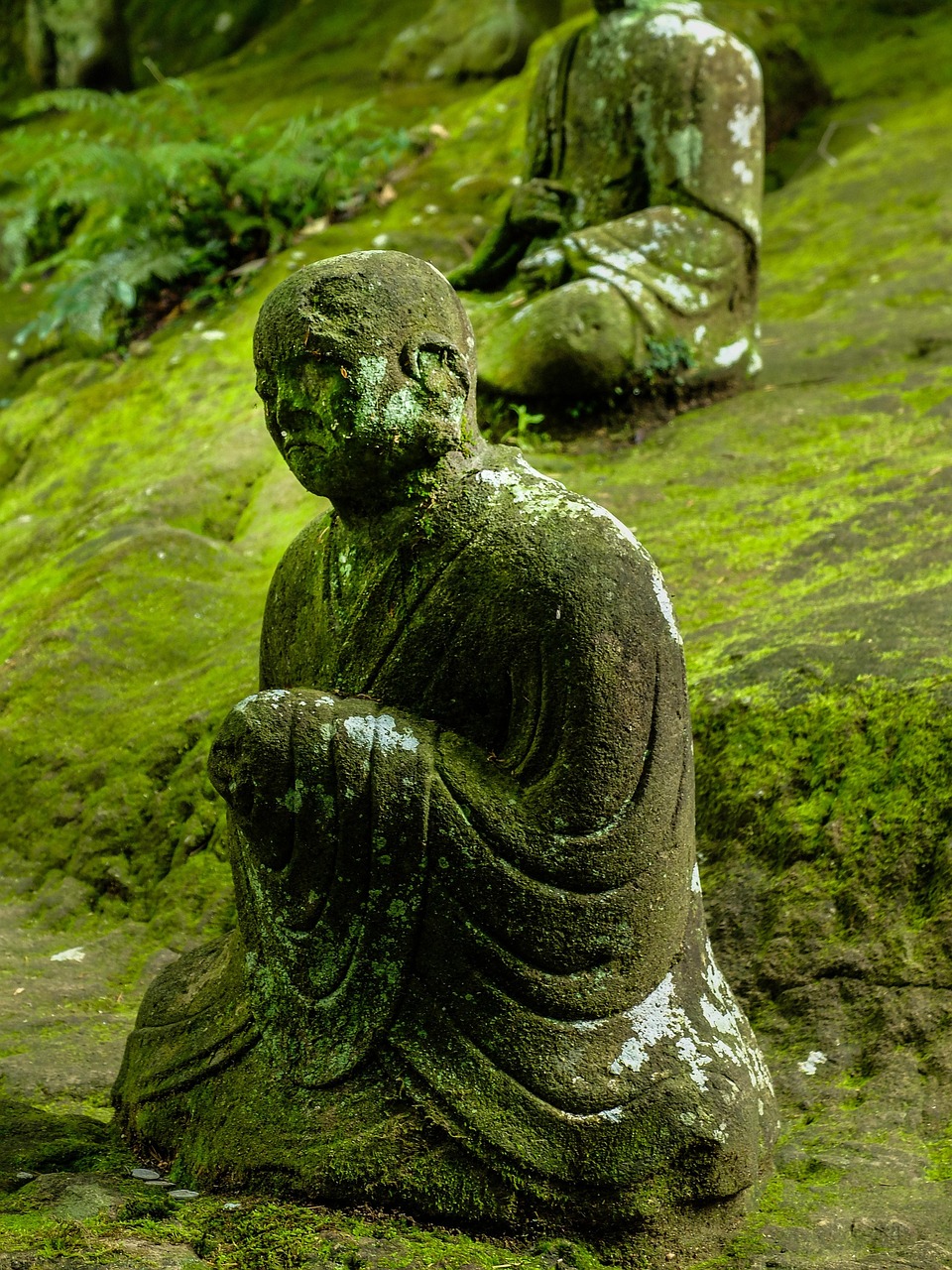
I’m not expecting you to know what the 4 Noble Truths are. Most Americans just think of Buddhists as passive monks. But there’s about 320 million Buddhists in the world and just like most world religions, there’s a pretty broad spectrum of beliefs amongst its followers. However, there is a basic framework that makes a Buddhist a Buddhist. None is more clear than the 4 Noble Truths. It was first articulated in Dhammacakkappavattana Sutta. No, I didn’t fall asleep on my keyboard, that’s the name of the text that records Siddhartha Gautama’s (i.e. The Buddha’s) first “sermon.” As the title suggests, I actually think the 4 Noble Truths of Buddhism are 75% accurate. He properly diagnoses the problems he sees in the world but doesn’t know the solution. Coming from the Christian worldview I am, I’m sure we don’t even agree on why we face such problems in this world. Let’s break it down.
- The 1st Noble Truths – Life has inevitable suffering
We all can see this one. This world is messed up and broken. There is pain for the rich and the poor in every tribe, tongue, and nation around the world. There is the suffering that comes from the deeds of evil men, and there is suffering that comes from the wilds of nature. Why I believe life has inevitable suffering is because of sin. When Adam and Eve brought sin into the world, it infected more than just their hearts. All of creation fell. Death entered the world and when food became scarce, death soon follows hunger. Animals killed animals. Men killed men. The plates of the earth shifted. The wind and the seas swirled. Everything began to decay, rot, rust, and break. So yeah, suffering in this life is inevitable.
- The 2nd Noble Truth – There is a cause to our suffering
Well, this is obvious too. If there’s suffering, there has to be a cause to it. As stated previously, I believe sin is the cause to our suffering, but to be as clear as I can be, I don’t just blame my ancient ancestor. I blame myself too. I am the sinner that causes my suffering. I don’t think that every bad thing that has ever happened to someone is all their fault, but we all have sinned and fallen short of God’s expectations. Thus, any “bad” thing that befalls us, we cannot say we don’t deserve. This is easy to say when a drunk driver is arrested and faces the consequences of his actions. It’s harder to say when that drunk driver hits a car with a family inside and a child is horrifically injured or killed. I’m reminded of when Jesus was about to heal the man born blind. People were asking, who sinned? He or his parents? If you say “he sinned,” it’s easy to retort well that doesn’t seem fair, he was born blind. Did he sin in the womb? And if you say “his parents,” well that seems even more messed up because why weren’t the parents blinded instead of their kid? Jesus instead reroutes the question by stating this man was born blind so that God might be glorified. When Jesus heals the man, He reveals who He was if people were paying attention. So how do I answer the question? Yes, suffering occurs so that God may be glorified. Everyone is deserving of suffering because everyone is born into sin. Everyone faces suffering because we are born into a sinful world. Everyone suffers because of their own sins, as well as sins done against them, as well as the effects of this broken world.
- The 3rd Noble Truth – There is an end to suffering
Well, this is only partly true even though I gave Mr. Buddha credit for it. There is an end to suffering, but not everyone gets to experience this end. According to Scripture, the sting of death has only been removed for those who have put their faith in Jesus Christ. Believers will experience the end of suffering in heaven, non-believers will not experience the end of suffering. This is probably the greatest discrepancy between Buddhism and Christianity. Buddhism doesn’t believe in God at all (it’s not unfair to call it an atheistic religion). They believe that everyone eventually will enter Nirvana (the eternal sea) after numerous rebirths. I think this is what most people like about Buddhism – the universalism. I know it’s comforting to think everyone gets “saved” eventually. However, the real question is, is it true? Buddha just said stuff. Was he right? Do we reincarnate? How do we know? What decides that I deserve the suffering I face based on my actions from a previous life? And I think the people that like the idea of Buddhism wouldn’t actually like the idea of Nirvana. It’s certainly not Heaven. It’s a fealing-less sea of nothing-ness. We’re like a drop of water joining back into the ocean. Eh. Christianity, on the other hand, believes God created a heaven and a hell. Jesus died on the cross and rose from the dead and all who believe in Him will be saved. That right there is the potential end of suffering.
- The 4th Noble Truth – The end of suffering is contained in the 8-fold path
This is why I say Buddhism diagnoses the problem correctly but has no idea of the solution. Buddhism is just a works-based solution like most world religions. The 8-fold path is just a list of good actions and good thoughts to have. Non-religious people tend to make statements like “all religions are basically the same.” They say that because they all say pray and don’t murder. I think most religions are similar because they say, “these good works will save you.” But Christianity absolutely says the opposite of that and is thus fundamentally different from the rest. Christianity says you can’t be good enough. In fact, it says “your righteous acts are as filthy rags.” They’re worthless to earn your own forgiveness. They have no capability in erasing your sin. People picture scales that are weighing your good and bad actions, and then hope their good outweighs their bad. But this assumes a lot. It assumes that’s how God chooses to judge sin (there’s no scripture stating this). They assume good and bad weighs the same (people are just making that up). It assumes most people have done more good than bad (it only works if we are the ones who decide what’s good and bad). The truth is that sin is infinitely heavy and our scales are filled to the brim with it. Praise the Lord that He had compassion on His creation and sent His one and only Son, Jesus Christ, to die on the cross in our place and in our stead. Jesus is the only solution for our suffering.
Lord, I pray for the 500 million or so Buddhists around the world. I pray their eyes are open. I pray they can see that it is appointed for a man to die once and then the judgement. I pray you continue to bring your followers near their communities that they may hear of the great and mighty name of Jesus.
 Joe Allotta